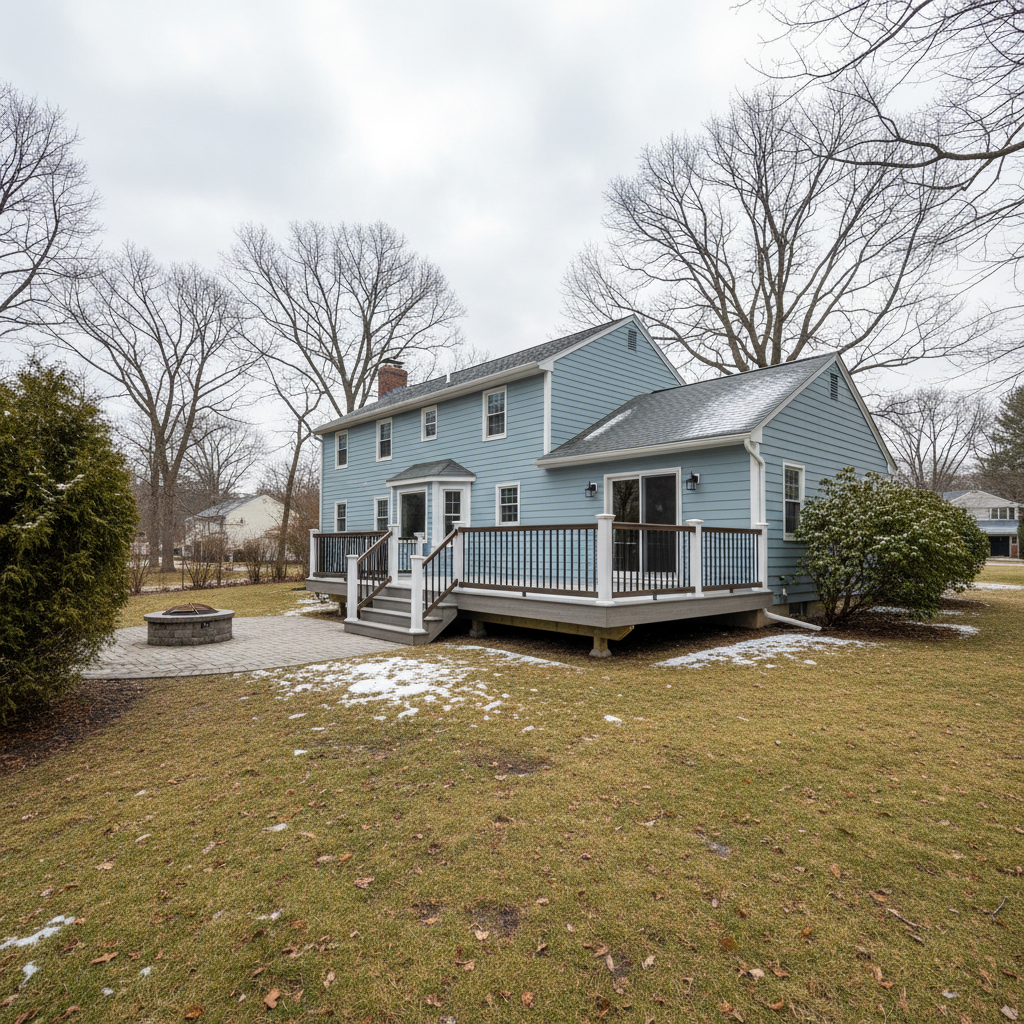
You're probably wondering if a composite deck is really 'set it and forget it' here in Cranston. Short answer? Mostly, but our New England weather still demands a little smart thinking, especially when it comes to installation and year-round care.
Understanding Cranston's Climate and Your Composite Deck
Our climate here in Rhode Island, particularly in places like Cranston, throws a lot at us. We get those hot, humid summers, freezing winters with snow and ice, and a fair bit of rain in between. While composite decking is tough – way tougher than wood when it comes to rot, splinters, and fading – it's not entirely immune to the elements, especially during installation.
Think about how materials expand and contract. Composite decking, made from a mix of wood fibers and plastic, does this too, just like everything else. Those big temperature swings we see, from a sweltering August day to a bitter January night, mean your deck boards are constantly moving a tiny bit. Good installation accounts for this, leaving proper gaps for expansion and contraction. If it's installed on a really cold day and the boards are already contracted, you might end up with bigger gaps than you want in the heat. Install it on a super hot day when they're expanded, and you risk buckling later on.
When to Schedule Your Composite Deck Project
So, when's the best time to build or replace a composite deck around here? I've found the sweet spot is usually spring or fall. The temperatures are more moderate, meaning the deck boards are closer to their 'average' size. This makes for a more stable installation and helps ensure those expansion gaps are just right.
- Spring (April to June): Great time. The ground isn't frozen, temperatures are rising but not scorching, and we usually get a good mix of sun and mild days. It lets your deck settle in before the full blast of summer.
- Fall (September to November): Also excellent. The summer heat has passed, and we're not yet into the deep freeze. It's a perfect time to get your deck ready for next year's outdoor living. Just watch out for those early cold snaps.
- Summer (July to August): We can definitely build in summer, but we have to be extra careful with board gapping. Those super-hot days, especially the ones with high humidity we get near the Pawtuxet River, mean boards are at their maximum expansion. We adjust our spacing accordingly, but it's something to be mindful of.
- Winter (December to March): Not ideal for new builds. Frozen ground makes digging footings a nightmare, and working with materials in freezing temperatures is tough. Plus, as I mentioned, installing composite when it's super cold can lead to issues with expansion gaps when the weather warms up.
Weather Conditions That Affect the Work
Beyond just temperature, other weather conditions play a role. We can't work in heavy rain or snow, obviously. It's a safety issue, and it's just not good for the materials or the foundation work. High winds can also be a problem, especially when framing or moving long boards. A little drizzle? We can usually manage. But a real downpour? We'll reschedule. We want to do the job right, and sometimes that means waiting for Mother Nature to cooperate.
Protecting Your Composite Deck Investment Year-Round
Now, about protecting that investment. The beauty of composite is its low maintenance, but 'low' doesn't mean 'no.' Here's what I tell folks:
- Regular Cleaning: A good sweep to get rid of leaves and debris is important, especially after fall. For a deeper clean, a soft brush and soapy water (mild dish soap works fine) will handle most dirt and grime. You can use a pressure washer, but be careful. Keep the nozzle at least 8-12 inches away from the deck surface and use a fan tip. Too close or too high pressure can damage the surface.
- Watch for Mold & Mildew: In our humid summers, especially if your deck is in a shady spot, mold and mildew can pop up. A composite deck cleaner, or a mix of white vinegar and water, usually takes care of it. Just make sure to rinse thoroughly.
- Snow Removal: When winter hits, you can shovel snow off your composite deck. Just use a plastic shovel, not metal, to avoid scratching the surface. Don't use rock salt; it can be abrasive and leave a residue. Calcium chloride-based ice melt is usually safe, but always check the decking manufacturer's recommendations.
- Furniture Pads: Put felt pads under your deck furniture legs. It's a simple thing, but it prevents scratches and scuffs over time.
- Trim Overhanging Branches: If you've got trees hanging over your deck, trim them back. Less shade means less moisture retention, which helps prevent mold and mildew. Plus, fewer leaves to clean up.
Ultimately, a composite deck from All Things Decks is a fantastic, long-lasting choice for your Cranston home. Just a little bit of seasonal awareness and basic care will keep it looking great and serving your family for decades. If you ever have questions, you know who to call.